business entity search michigan
Michigan Business Entity Search: A Complete Guide to Finding Registered Businesses

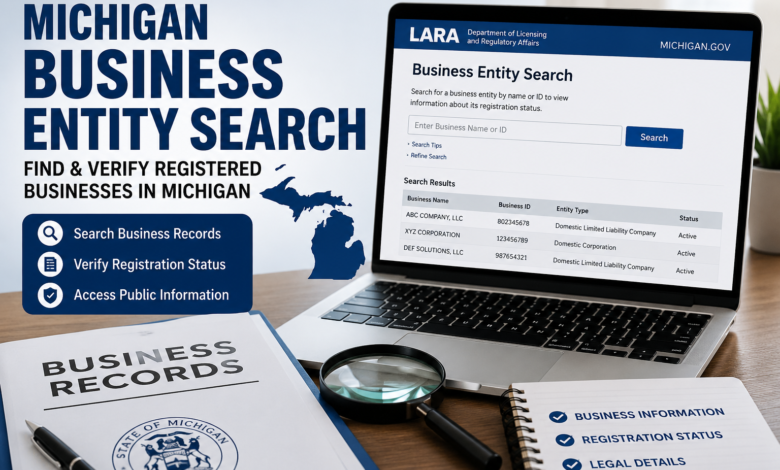
Michigan Business Entity Search: A Complete Guide to Finding Registered Businesses
Whether you are launching a new venture, checking the credibility of a business, or evaluating a potential partnership, reliable business information can help you make informed decisions with confidence. One of the most effective ways to obtain this information is through a Michigan Business Entity Search.
Business records provide valuable details about companies operating within the state. Entrepreneurs, investors, consumers, and legal professionals often use these records to confirm business legitimacy, identify ownership details, and review registration status. Understanding how business entity searches work can help you make informed decisions and avoid unnecessary risks.
This guide explains what a Michigan Business Entity Search is, why it is important, how it works, and how you can use it effectively.
What Is a Business Entity Search?
A business entity search is a process that allows individuals to look up information about businesses registered within a specific state. In Michigan, business records are maintained by the state government and are available to the public through online databases.
When conducting a search, users can typically find information such as:
- Business name
- Registration status
- Entity type
- Formation date
- Registered agent information
- Business identification numbers
- Filing history
These details help verify whether a business is legally registered and actively operating within Michigan.
Why Michigan Business Entity Search Matters
Business transparency plays an important role in maintaining trust between organizations and consumers. A Michigan Business Entity Search helps provide that transparency by making essential business information accessible.
Here are some common reasons people perform a business entity search:
Verifying Business Legitimacy
Before signing contracts, making investments, or purchasing services, it is wise to confirm that a company is legally registered. A search can reveal whether a business is active, dissolved, or no longer authorized to operate.
Researching Competitors
Business owners often review competitor information to better understand the market. Public records can provide useful insights regarding company formation dates and organizational structures.
Choosing a New Business Name
Entrepreneurs starting a new venture must ensure that their desired business name is not already in use. Conducting a search helps prevent naming conflicts and potential legal issues.
Supporting Legal and Financial Decisions
Attorneys, lenders, and investors frequently review business records as part of due diligence procedures before entering into agreements.
Information Available Through Business Records
Michigan business records contain a variety of useful information. The exact details available may vary depending on the business structure and filing history.
Common information includes:
Business Name
The official legal name under which the company is registered.
Entity Type
The organizational form under which the company operates, including:
- Limited Liability Company (LLC)
- Corporation
- Nonprofit Organization
- Partnership
- Professional Entity
Understanding the entity type helps determine how the business is organized and regulated.
Registration Status
A status indicator shows whether the company is:
- Active
- Dissolved
- Expired
- Withdrawn
- Inactive
This information is critical when evaluating a company’s current standing.
Formation Date
The formation date indicates when the business was officially established.
Registered Agent
Many businesses designate a registered agent to receive legal notices and official correspondence.
Filing History
Business records may include information about annual reports, amendments, and other filings submitted over time.
How to Perform a Michigan Business Entity Search
Conducting a business search is generally straightforward. The process usually involves entering a business name or identification number into a searchable database.
To improve search accuracy:
Use Exact Business Names
Entering the full legal name often produces the most accurate results.
Try Partial Searches
If you are unsure of the complete business name, partial searches may help identify possible matches.
Remove Punctuation
Many databases return better results when punctuation and special characters are omitted.
Check Alternate Spellings
Businesses sometimes operate under names that differ slightly from their registered legal names.
Benefits for Entrepreneurs
Entrepreneurs can gain significant value from business entity searches.
Avoid Name Conflicts
One of the most important steps when launching a company is selecting a unique name. Searching existing records helps identify names that may already be registered.
Protect Brand Identity
Choosing a distinct name can reduce confusion among customers and strengthen brand recognition.
Streamline Registration
Confirming name availability before filing paperwork can save time and prevent application delays.
Benefits for Consumers
Public business records can also provide valuable insights for customers who want to verify a company’s legitimacy before making a purchase or signing a service agreement.
Before hiring a contractor, purchasing products, or signing service agreements, customers can verify that a business is properly registered.
This extra layer of research can reduce the likelihood of dealing with fraudulent or inactive organizations.
Benefits for Investors
Investors often conduct extensive research before committing funds to a business.
A Michigan Business Entity Search can provide valuable information that supports due diligence efforts, including:
- Verification of legal existence
- Review of operational status
- Confirmation of registration history
- Identification of organizational structure
These details contribute to more informed investment decisions.