Workplace Management EWMagWork
Workplace Management EWMagWork: Building a Productive and Employee-Friendly Workplace

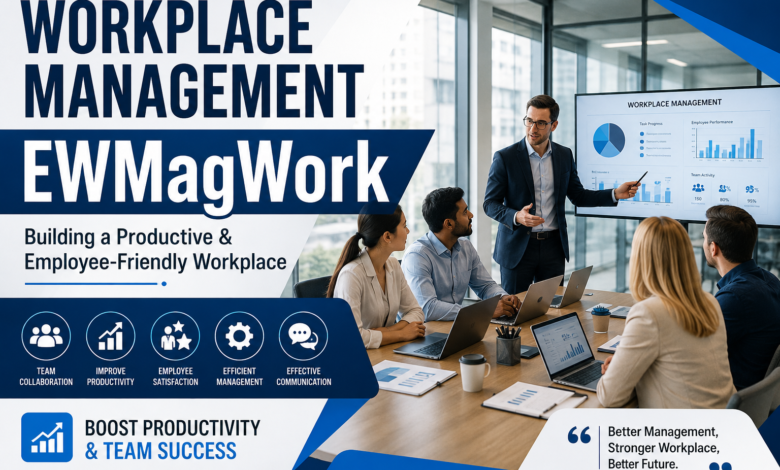
Workplace Management EWMagWork: Building a Productive and Employee-Friendly Workplace
Modern businesses are changing rapidly. Companies no longer focus only on profits; they also pay close attention to employee experience, workplace culture, communication, and overall efficiency. In this environment, Workplace Management EWMagWork has become an important topic for organizations that want to create a productive and employee-friendly workplace.
Effective workplace management is not just about assigning tasks. It involves creating systems that help employees perform their best, improving collaboration, managing resources wisely, and building a positive work environment. Businesses that invest in workplace management often experience better productivity, lower employee turnover, and stronger team performance.
What Is Workplace Management EWMagWork?
Workplace Management EWMagWork refers to modern approaches, strategies, and tools used to manage employees, office operations, communication, and workplace resources efficiently. The goal is to ensure that both the organization and its employees can work effectively while maintaining a healthy and supportive environment.
This concept combines several important areas:
-
Employee management
-
Team collaboration
-
Workplace communication
-
Resource allocation
-
Performance monitoring
-
Workplace culture
-
Flexible work arrangements
Instead of focusing on one department, workplace management looks at the organization as a whole.
Why Workplace Management Matters
A well-managed workplace can significantly affect business success. Employees who work in an organized and supportive environment are usually more motivated and engaged.
Some key benefits include:
Higher productivity
Clear processes help employees complete tasks more efficiently.
Better employee satisfaction
Workers are more likely to stay with a company that values their experience.
Improved communication
Teams can share information quickly and avoid misunderstandings.
Reduced operational problems
Good management helps identify issues before they become serious.
Stronger company culture
Employees feel connected to the organization and its goals.
Core Elements of Workplace Management EWMagWork
1. Employee Engagement
Engaged employees are more likely to contribute ideas, solve problems, and support company goals. Organizations can improve engagement by:
-
Recognizing achievements
-
Providing growth opportunities
-
Encouraging feedback
-
Supporting work-life balance
When employees feel valued, their performance often improves.
2. Effective Communication
Communication is one of the most important parts of workplace management. Teams need clear instructions, regular updates, and open channels for discussion.
Businesses can improve communication through:
-
Team meetings
-
Collaboration platforms
-
Clear reporting structures
-
Transparent leadership communication
Poor communication can lead to confusion, delays, and workplace conflicts.
3. Flexible Work Models
Many organizations now support remote or hybrid work arrangements. Workplace Management EWMagWork recognizes that flexibility can increase employee satisfaction while maintaining productivity.
Successful flexible work policies usually include:
-
Clear expectations
-
Performance tracking
-
Digital collaboration tools
-
Regular team check-ins
4. Resource Management
Workplace resources include office space, equipment, software, and employee time. Managing these resources efficiently helps reduce costs and improve operations.
Examples include:
-
Optimizing office layouts
-
Managing meeting rooms
-
Tracking equipment usage
-
Reducing unnecessary expenses
5. Performance Management
Employees perform better when goals are clear and progress is measured fairly. Effective performance management focuses on development rather than punishment.
Important practices include:
-
Setting realistic goals
-
Providing regular feedback
-
Offering training opportunities
-
Recognizing improvement
Challenges in Modern Workplace Management
Despite its benefits, workplace management also presents challenges.
Managing Remote Teams
Leaders may find it difficult to maintain collaboration and accountability when employees work from different locations.
Preventing Burnout
High workloads and constant connectivity can increase employee stress.
Adapting to Technology
Organizations must continuously learn and adopt new tools and systems.
Maintaining Company Culture
As teams grow or become remote, preserving a strong culture becomes more challenging.
Best Practices for Workplace Management EWMagWork
Create Clear Policies
Every team member should have a clear understanding of company standards, including punctuality, professional communication, job responsibilities, and expected conduct in the workplace.
Invest in Training
Training helps employees develop new skills and adapt to changing business needs.
Encourage Collaboration
Cross-functional teamwork often leads to better ideas and faster problem-solving.
Use Technology Wisely
Digital tools should simplify work rather than create unnecessary complexity.
Listen to Employees
Regular surveys, feedback sessions, and one-on-one meetings can help leaders understand employee concerns.
The Role of Leadership
Leadership plays a major role in workplace management success. Managers and executives set the tone for communication, accountability, and company culture.
Effective leaders typically:
-
Communicate clearly
-
Support employee development
-
Resolve conflicts fairly
-
Encourage innovation
-
Lead by example
Employees are more likely to follow workplace standards when leaders demonstrate those standards themselves.
Future Trends in Workplace Management
The future of workplace management is likely to include:
Greater Use of AI
Artificial intelligence may help automate scheduling, reporting, and administrative tasks.
Data-Driven Decision Making
Organizations will increasingly use workplace data to improve efficiency and employee experience.
Personalized Employee Experience
Companies may offer more customized benefits, learning paths, and work arrangements.
Focus on Well-Being
Organizations are increasingly focusing on employee well-being by supporting mental wellness initiatives, promoting healthier work habits, and encouraging a better balance between professional and personal life.
Conclusion
Workplace Management EWMagWork represents a modern approach to building efficient, collaborative, and employee-focused organizations. Businesses that manage communication, resources, performance, and workplace culture effectively are better positioned for long-term success.
In today’s competitive environment, companies cannot rely solely on traditional management methods. Employees expect flexibility, support, growth opportunities, and a positive work experience. Organizations that meet these expectations often enjoy stronger productivity, better retention, and improved business results.
By focusing on people as well as processes, workplace management becomes more than an administrative function—it becomes a strategy for sustainable growth and organizational success.