Fascisterne: Understanding the History, Ideology, and Lasting Impact of Fascism
An Educational Guide to the Rise, Principles, and Global Impact of Fascist Movements

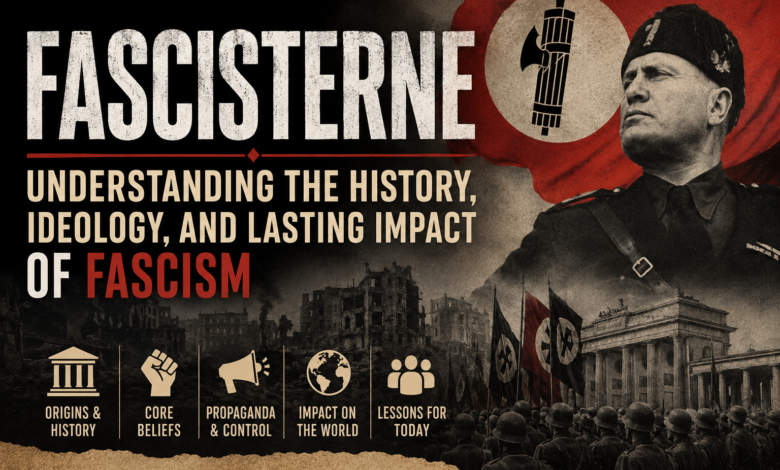
Fascisterne: Understanding the History, Ideology, and Lasting Impact of Fascism
Introduction
The term “Fascisterne” comes from the Danish language and translates to “the fascists” in English. It is commonly used when discussing individuals, groups, or movements that support fascist ideology. Throughout the twentieth century, fascism played a significant role in shaping political events across Europe and beyond. Its influence affected governments, societies, economies, and international relations, leaving a lasting impact that historians and political analysts continue to study today.
Understanding Fascisterne is not only important for learning about the past but also for recognizing how political movements can influence societies. By examining its origins, beliefs, and historical consequences, we gain valuable insights into the importance of democratic institutions, civil liberties, and political accountability.
What Does Fascisterne Mean?
Fascisterne refers to people who support or promote fascist ideas. The word originates from the broader concept of fascism, a political ideology that emerged in Europe during the early twentieth century. While the term is often associated with historical movements in Italy and Germany, it can also describe groups that share similar authoritarian and nationalist principles.
Today, the term is frequently used in discussions about political history, extremism, and the protection of democratic values. Because of its historical associations, it carries strong emotional and political significance.
The Origins of Fascism
The roots of fascism can be traced to the period following World War I. Many European countries faced economic instability, political uncertainty, and social unrest. Large portions of the population became frustrated with existing political systems and sought alternative solutions to national problems.
In Italy, Benito Mussolini established one of the first fascist movements. He promoted the idea of a strong central government capable of restoring national pride and stability. His approach attracted supporters who believed that decisive leadership could solve economic and political challenges.
As similar ideas spread throughout Europe, different movements adopted variations of fascist principles. Although these groups differed in some respects, they generally shared a commitment to strong leadership, nationalism, and centralized authority.
Core Principles Behind Fascisterne
Several key principles are commonly associated with fascist ideology.
Strong Leadership
Fascist movements often emphasize the importance of a powerful leader who represents the interests of the nation. Decision-making authority is concentrated in the hands of a small group or a single individual rather than distributed through democratic institutions.
Nationalism
National identity plays a central role in fascist thought. Supporters frequently promote the idea that the nation should be prioritized above individual interests. This emphasis on national unity is often accompanied by appeals to cultural pride and historical traditions.
Opposition to Political Dissent
Fascist governments historically limited political opposition and discouraged criticism. Independent organizations, opposition parties, and critical voices often faced restrictions under such systems.
State Influence
Another common characteristic involves increased government involvement in social, political, and economic affairs. The state is viewed as a central force responsible for directing national development and maintaining order.
Fascisterne and European Politics
During the 1920s and 1930s, fascist movements gained attention in several European countries. Economic difficulties and political instability created conditions in which many citizens were willing to consider alternative forms of government.
Some organizations sought to replicate the successes they perceived in other authoritarian regimes. While support levels varied from country to country, these movements influenced political debates and public discussions across the continent.
In Denmark, the term Fascisterne became associated with groups that adopted fascist-inspired ideas. Although such movements never achieved the same level of power seen elsewhere in Europe, they contributed to broader political conversations during a turbulent historical period.
The Role of Propaganda and Media
Propaganda played an important role in many fascist movements. Leaders recognized the power of communication in shaping public opinion and building support.
Newspapers, radio broadcasts, posters, speeches, and public events were frequently used to promote political messages. By controlling information and emphasizing specific narratives, movements could strengthen loyalty among supporters and influence public perceptions.
The use of propaganda demonstrates how communication tools can affect political behavior. It also highlights the importance of independent media in maintaining informed and engaged societies.
World War II and the Decline of Fascism
The influence of fascism reached its peak during the years leading up to World War II. Several governments that embraced authoritarian and nationalist policies became deeply involved in the conflict.
The devastation caused by the war had profound consequences for Europe and the wider world. Millions of lives were lost, economies were damaged, and entire communities experienced long-lasting hardships.
Following the end of the war, many fascist governments collapsed or were removed from power. The international community increasingly focused on rebuilding democratic institutions and promoting cooperation among nations. These efforts helped establish political frameworks designed to prevent similar conflicts in the future.
Lessons Modern Societies Can Learn
Studying Fascisterne provides valuable lessons for contemporary societies.
One important lesson is the significance of democratic participation. When citizens actively engage in political processes, they contribute to accountability and transparency within government institutions.
Another lesson involves the protection of civil liberties. Freedom of expression, independent journalism, and equal treatment under the law are essential components of healthy democratic systems.
Education also plays a crucial role. Learning about historical events helps individuals understand the consequences of intolerance, discrimination, and unchecked political power.
Why Fascisterne Still Matters Today
Although the historical fascist movements of the twentieth century have largely disappeared, discussions about Fascisterne remain relevant. Scholars, journalists, and policymakers continue to analyze historical examples in order to better understand political extremism and authoritarian tendencies.
Modern societies face complex challenges that require informed decision-making and civic engagement. Examining past political movements helps people recognize warning signs, appreciate democratic values, and encourage constructive public dialogue.
The continued study of Fascisterne serves as a reminder that political systems can have far-reaching effects on individuals and communities. Historical awareness contributes to a deeper understanding of both the successes and failures of previous generations.
Conclusion
Fascisterne represents more than a historical term. It reflects an important chapter in political history that influenced nations, shaped conflicts, and transformed societies. Understanding its origins, principles, and consequences helps us appreciate the value of democratic governance, human rights, and responsible leadership.
By studying the experiences of the past, modern societies can work toward creating more inclusive, stable, and resilient political systems. The lessons associated with Fascisterne continue to offer valuable insights for anyone interested in history, politics, and the future of democracy.